
Police Pulled News Crew from Their News Vehicle
/
A marked live truck or news vehicle used to be treated by law enforcement as a neutral boundary line, but those days appear to be completely over. During intense protests outside the Delaney Hall detention center in Newark, New Jersey, a WNBC news crew found out the hard way that a wrapped station vehicle offers zero protection when the riot gear comes out.
The incident unfolded late Friday night as New Jersey State Police moved to clear demonstrators who had refused to move into newly designated protest pens. State troopers in full tactical gear, flanked by mounted officers, advanced on the crowd with riot shields and deployed tear gas to disperse the remaining sit-in.
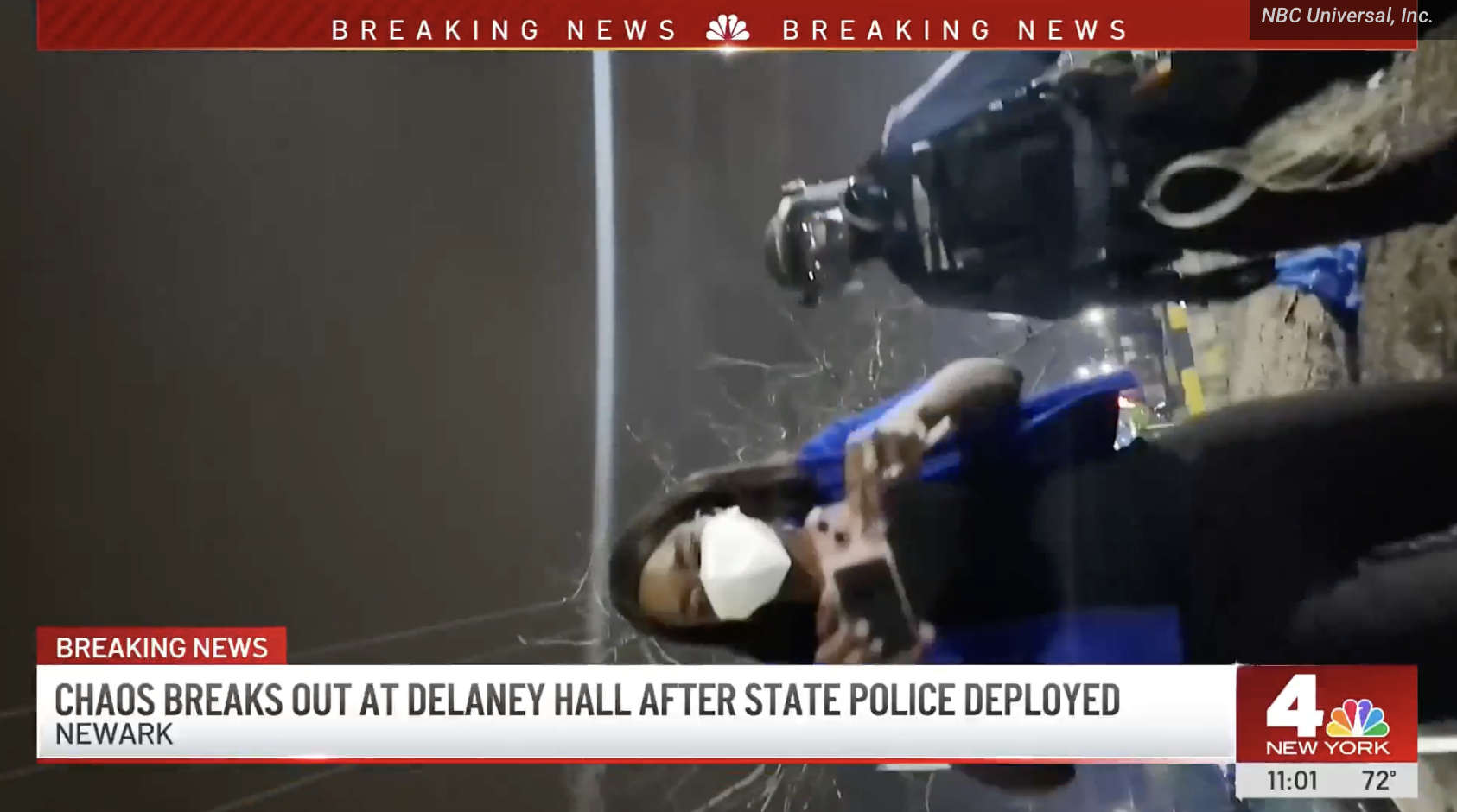
Right in the middle of the chaos was a marked WNBC television vehicle. Instead of allowing the journalists to use the vehicle as a safe vantage point to capture the escalating situation, state troopers actively approached the car. Officers ordered the reporter and photojournalist to exit the vehicle immediately.
With no other choice but to comply with police orders, the WNBC crew stepped out of their vehicle directly into a thick cloud of tear gas that had just been fired into the roadway. The journalists, caught completely exposed, were forced to flee on foot through the gas while struggling to breathe, running alongside fleeing protesters just to reach a clear area.
The division of the New Jersey Attorney General’s Office overseeing the state police stated they are gathering information but have not offered an explanation for why a clearly identified news crew was forced out of their vehicle into a chemical deterrent. Civil liberties groups, including the ACLU of New Jersey, have already condemned the tactical response, pointing out that journalists and legal observers were targeted by excessive force alongside demonstrators.
For television journalists and managers handling field safety, this situation serves as a stark reminder of changing field dynamics. If you are sending crews into high-tension environments, do not assume a wrapped station car provides a safe haven. Crews must be equipped with personal protective gear, including properly fitted gas masks, on their person at all times—because you can no longer count on being allowed to stay inside the truck when things go sideways.
H/T WNBC