

Back on Camera
/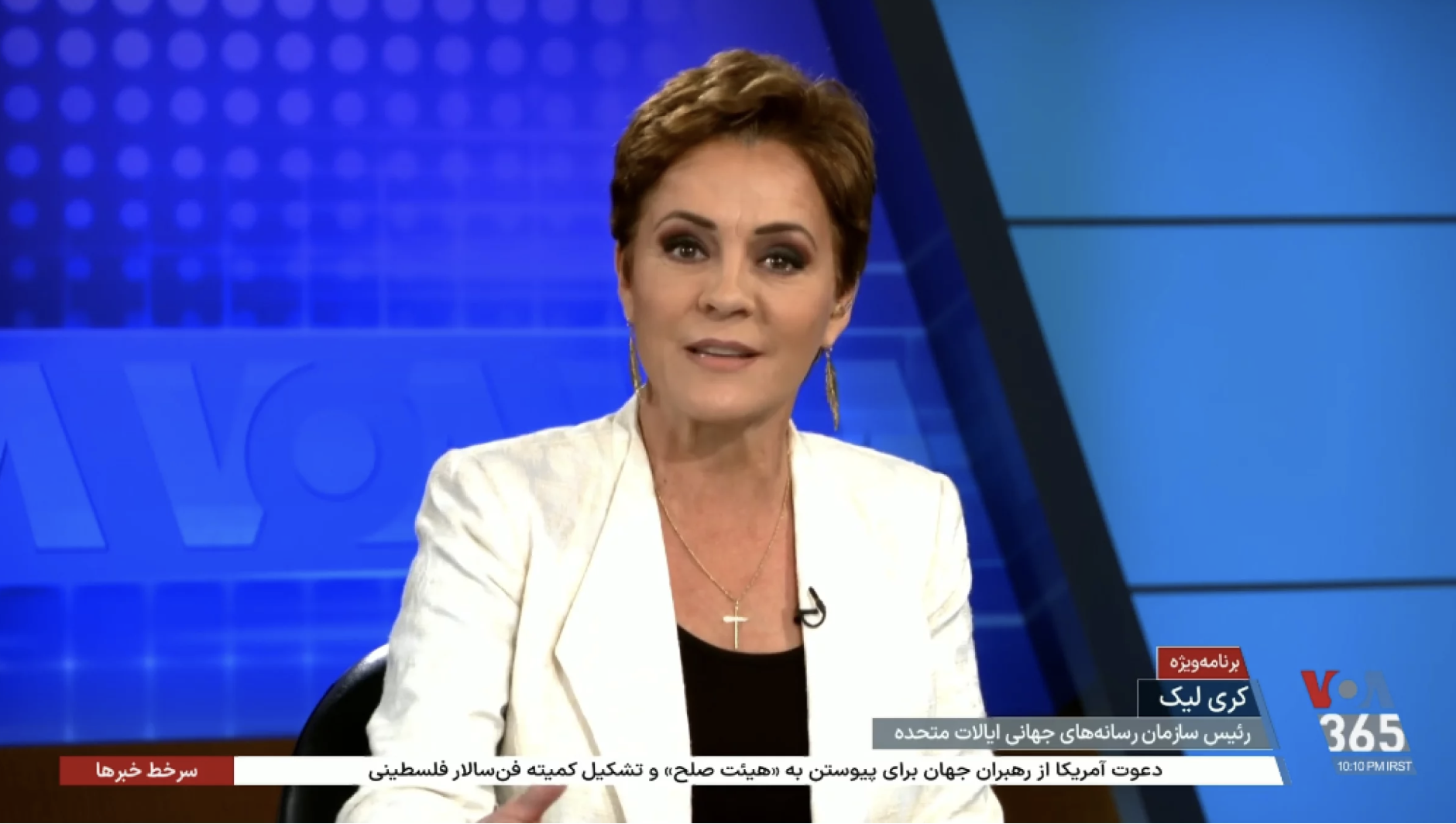
The studio lights hummed with a familiarity that Kari Lake hadn't felt in years, a reminder of her decades spent as a nightly news anchor. But this time, the setting was different. She wasn't at a local affiliate desk in Phoenix; she was seated in the Washington headquarters of the Voice of America’s Persian-language service, flanked by an interpreter and facing a global audience.
As the head of the agency overseeing the broadcaster, Lake had spent months attempting to dismantle the government-funded network, navigating a maze of legal and political roadblocks. Stymied by bureaucracy, she had seemingly chosen a different tactic: commandeering the airwaves she couldn't yet dissolve.
The "On Air" tally light turned red, and Lake leaned into the lens with practiced ease. It was the week marking the completion of President Trump's first year in office, and the segment was ostensibly a review of administrative policy. However, as the five-minute interview progressed, the tone shifted from oversight to overt promotion—a pivot that blurred, and perhaps crossed, the lines of federal law prohibiting the politicization of state-funded media.
"He is the president of peace," Lake declared, pausing for the interpreter to relay the message to the Iranian audience. She spoke with the cadence of a campaign surrogate rather than an agency director, lauding the administration’s aggressive posture toward Tehran.
She didn't stop there. Ignoring the constraints of the venue, she reiterated the President's contentious claims regarding foreign policy successes. "He has ended eight wars and conflicts," she stated firmly, a soundbite that flew out over the government-owned signal, unchallenged.
For those five minutes, the line between state broadcasting and political advertising evaporated. Lake was back on camera, doing what she knew best, but the broadcast wasn't just news—it was a test of how far the machinery of the Voice of America could be bent before the law snapped back.