

This is Happening in America
/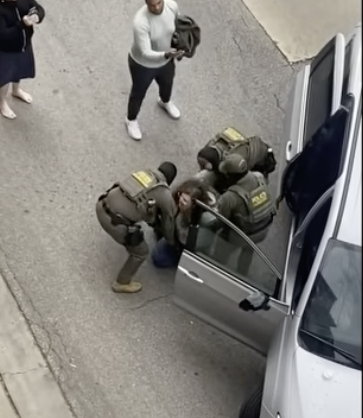
The Chicago morning was just beginning to stir in the Lincoln Square neighborhood when the black, unmarked van rolled up, its presence a sudden, jarring intrusion. This wasn't a standard police action. The figures that spilled out—masked, heavily equipped—were federal agents from U.S. Border Patrol, a component of the Department of Homeland Security (DHS), conducting an immigration enforcement action.
Debbie Brockman, a video producer and editor for WGN-TV, was a U.S. citizen and resident of the neighborhood. She, like other stunned bystanders, stepped out to see what was happening. Eyewitness accounts suggest the agents were attempting to detain individuals, reportedly landscapers, in the area. As the scene grew chaotic, a local resident with a phone began filming.
It was then that the federal agents turned their attention to Brockman.
Videos shared on social media captured the dramatic, unsettling moment: masked agents violently forced the woman, Debbie Brockman, to the ground. She was seen pinned, her hands being cuffed behind her back in the middle of a residential street. Amidst the struggle, an onlooker's voice rang out, asking for her name.
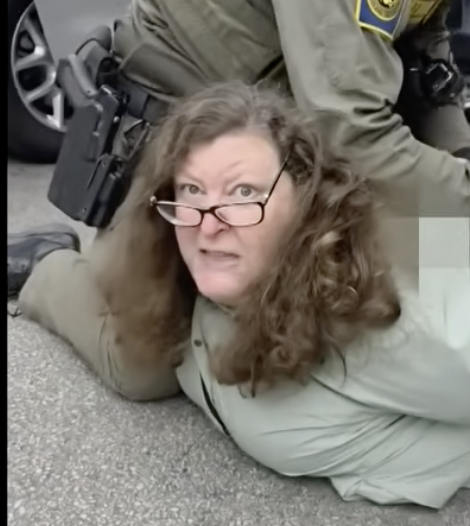
"Debbie Brockman," she cried out, her voice strained. "I work for WGN. Please let them know."
The Department of Homeland Security later issued a statement asserting that Brockman had been placed under arrest for "assault on a federal law enforcement officer," claiming she had thrown objects at a Border Patrol vehicle and was one of "several violent agitators" attempting to impede the officers. Witnesses, however, disputed this account, suggesting Brockman was merely standing there, taking video, and was arrested for "obstructing justice."
The confrontation climaxed when agents hauled the handcuffed WGN employee into the unmarked silver van, which then sped away, reportedly scraping another vehicle in its haste to leave the scene as neighbors yelled protests and epithets at the agents.
The spectacle ignited immediate public outrage, raising critical questions about the aggressive tactics of federal law enforcement operating in American cities. A U.S. citizen, a local news employee, had been violently detained by border agents far from any border, on grounds that were highly contested by those who saw the event unfold.
The most telling detail, however, followed just hours later.
Despite the serious federal allegation of "assaulting a federal law enforcement officer"—a charge that would typically lead to a night in a detention facility and swift federal prosecution—Debbie Brockman was released from federal custody later that same day.
No charges were filed against her.
For many, the non-filing of charges was the clearest statement of all. It painted the arrest as a temporary, punitive detention—a chilling display of power during a ramped-up immigration enforcement campaign authorized by the administration in Washington. The entire sequence—the masked agents, the violent takedown of a local news employee, the unmarked van, the immediate release without charges—crystallized fears about federal overreach and a perceived lack of accountability in the deployment of federal law enforcement on the streets of America's cities.